Manual measurement is inefficient
Only a few pipe-end samples are measured manually, making it difficult to identify the true major and minor axes.
 edgeApe 中文
 Measure pipe-end geometry automatically; eliminate non-compliant pipes in advance; simulate every joint; locate the best angle; search for the optimal pipeline
Contact Us01
Only a few pipe-end samples are measured manually, making it difficult to identify the true major and minor axes.
Without strict pairing standards, operators use different methods and completion speed depends heavily on experience.
Abnormal pipes may reach the production line and require extra grinding, delaying offshore pairing and laying.
Major/minor-axis matching cannot achieve the best fit, while manual work is limited by measurement density and computing capacity.
02
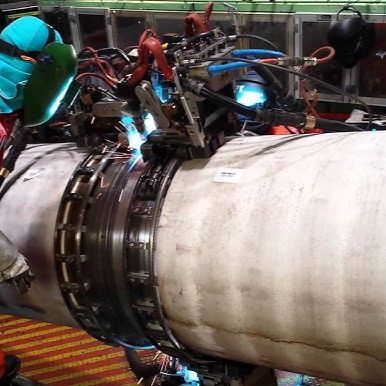
pipeMaten combines handheld measurement, automatic pairing, abnormal-pipe analysis and pipeline generation in one integrated toolbox.
03
A handheld geometry instrument collects all pairing data in about 20 seconds per pipe end.
Measured pipe ends are classified automatically according to defined standards.
All possible joints are simulated so non-compliant ends can be removed before entering the production line.
Two pipe ends can be paired in 1–3 seconds with a specific rotation angle and operating procedure.
edgeApe
Contact us to explore how our innovative solutions can help your business reduce costs, improve efficiency and enhance product quality.
Contact UsEmail
team@edgeape.com
Address
中国,天津市,南开区,天津科技广场3号楼901-1